

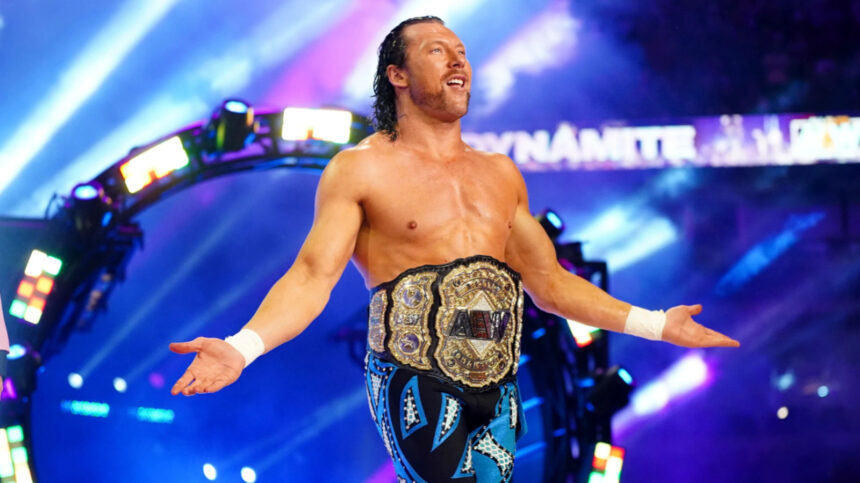
Back in the fall of 2021, AEW was arguably at its most exciting moment so far. Just weeks before their inaugural Grand Slam event in New York, the company bolstered its roster with huge names like CM Punk, Bryan Danielson, and Adam Cole — wrestlers who have since parted ways with AEW. As we approach the next Grand Slam set for February 11, 2026, it’s worth revisiting that first Grand Slam, which took place at Arthur Ashe Stadium in Queens and spanned both AEW Dynamite and Rampage (yes, Rampage, which we hardly see anymore). The event drew over 20,000 fans, and saw Kenny Omega nearing the end of his AEW World Championship reign, Britt Baker successfully defend the women’s title, Penta and Rey Fenix capturing the AEW Tag Team Championships, and Miro winning the TNT Championship despite not wrestling that night. Several AEW titles we know today had yet to be created.
Let’s explore what stood out and what fell flat during that landmark show.
Highlight: The promising start with Bryan Danielson
Bryan Danielson’s full-time AEW career arguably ranks among the best in recent wrestling history, and it began with a “dream match” against Kenny Omega. Their opening contest on Dynamite ended in a 30-minute draw but remains one of AEW’s most memorable bouts. This match was about more than just wrestling—it marked the return of Danielson’s old persona, which embraced a harder edge than his Daniel Bryan character ever could. The crowd, fully aware of the moment’s significance, stayed fully engaged from start to finish. Managed by Don Callis, Omega played the villain perfectly, attempting to derail Danielson and slow the match’s pace, culminating in an intense back-and-forth toward the end. When the match concluded, interference from allies led to a brawl, setting the stage for future conflicts. Though they never rematched at this event, it symbolized the beginning of Danielson’s chapter in AEW and the soon-to-end reign of Omega’s world title.
Disappointment: The slow progress in AEW’s women’s division booking
Across the near four-hour combined show, women’s wrestling received just around 20 minutes, while men’s matches totaled roughly 126 minutes—an obvious imbalance. While Britt Baker and Ruby Soho headlined Dynamite’s women’s bout, it paled compared to the explosive matches like Omega vs. Danielson or Cody Rhodes vs. Malakai Black in terms of attention. Baker and Soho delivered a solid match, but their story didn’t get the spotlight it deserved on such a major stage. The Rampage match between Anna Jay and Penelope Ford was even less impressive, short and sloppy, a disappointing inclusion in the lineup. The underlying issue was the booking strategy at the time, where women’s matches consistently took a backseat despite adequate talent in the roster. Although the division has grown since, this event serves as a reminder of how far AEW had to go.
Highlight: Always a pleasure to watch veteran Sting
Coming from a background where WCW was barely on the radar, my first live exposure to Sting came during his AEW debut, and his performance was outstanding, despite his age. Unlike relying on Darby Allin to carry tag matches, Sting constantly raised the bar, as he did this night with FTR—who skillfully played off Sting’s legacy and delivered a compelling match. The bout featured fun moments such as Sting accidentally headbutting Dax Harwood and Darby Allin using his signature daredevil style. Sting ultimately triumphed, with Allin following up with his finishing moves. Though not the finest match from the FTR-Sting duo, it was a standout moment showing the enduring appeal of old-school wrestling.
Disappointment: A hefty number of these talents eventually left AEW
Between matches and commentary, nine wrestlers from these shows later departed AEW for WWE, plus a few rumored to be heading that way, including household names like Private Party and Chris Jericho. While it’s natural for AEW, as the number two US wrestling promotion, to lose stars to larger companies—something that can benefit the business overall—it’s still bitter to see. For instance, Cody Rhodes’s exit and the fact that House of Black never hit its potential is regrettable. CM Punk’s early departure shook fans who had high hopes following his return. Others like Powerhouse Hobbs, now WWE’s Royce Keyes, and the Lucha Brothers (Rey Fenix and Penta) also left. Ricky Starks stands out as one of AEW’s major lost talents, likely headed to WWE soon, and while good for his career, a blow to AEW’s star power.
Highlight: The intense brawl between Jon Moxley, Eddie Kingston, and Suzuki-gun
Rampage’s main event wasn’t a high-profile technical match like Danielson vs. Omega, but it delivered a hard-hitting spectacle featuring Jon Moxley and Eddie Kingston against Suzuki-gun. Their chemistry as partners or opponents remains unmatched. From steel chair fights and kendo stick attacks to table smashes and brutal strikes, the match was fast-paced and physical, though it lacked the extreme violence expected in a Lights Out match. Regardless, it was highly entertaining, and a nice bonus featured Ricky Starks on commentary amid emerging storylines.
Disappointment: No other match matched the quality of the opener
Putting the Omega vs. Danielson match first had its rationale—time constraints and drawing viewers immediately—but hindsight shows that nothing else on the card reached that level. Watching the show now, it’s clear the opening match was easily the highlight, making the rest feel comparatively dull. While Grand Slam events are known for strong lineups, this inaugural show inverted that concept by frontloading the best match instead of saving it for the climax. As a result, the following three-plus hours felt weaker, lacking a well-crafted buildup to a climactic finale.
Fan Take: This look back at AEW’s first Grand Slam is important because it highlights both the early promise and challenges the company faced during a pivotal time. For fans, recognizing these moments helps us appreciate AEW’s growth and sparks hope for continued evolution in storytelling and talent development, influencing the future of pro wrestling.