



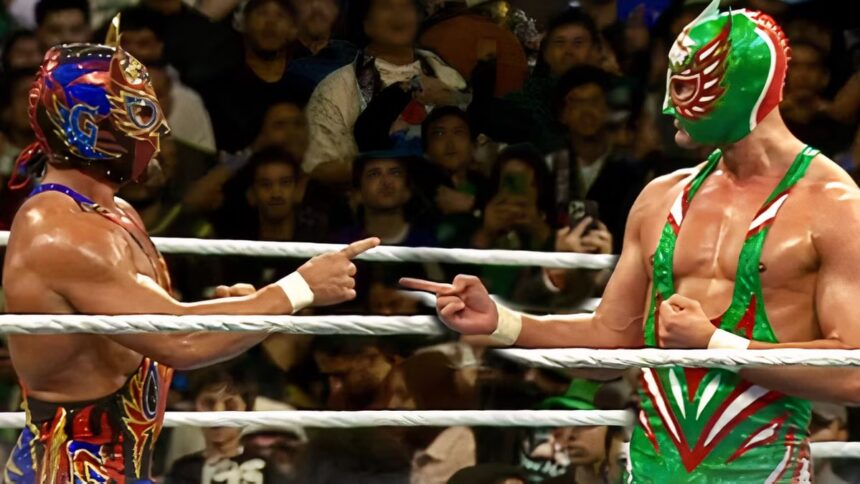
At the 2026 Royal Rumble PLE, fans witnessed a unique showdown where two wrestlers portrayed the same character, El Grande Americano. After the original El Grande Americano was sidelined due to injury, he made a comeback to reclaim his persona and prove he was the genuine article. This storyline is just one example of wrestling’s quirky fascination with “stolen identity” plots, which have appeared time and again across promotions like WWE, WCW, and AEW, leaving memorable—even if often bizarre—impressions on audiences.
Notably, Chad Gable originated the El Grande Americano gimmick as a way to master Lucha Libre, but after his injury, Ludwig Kaiser stepped in and elevated the character. Their rivalry reignited at the 2026 Royal Rumble as the original clashed with the impersonator. Since then, the true El Grande Americano has interfered with Kaiser’s matches on RAW, spotlighting his determination to reclaim his character.
The Undertaker’s “impostor” saga began when Ted DiBiase introduced a fake Undertaker during the real one’s injury absence. The real Undertaker returned to triumph over the fake version, culminating in their infamous main event at SummerSlam 1994—considered one of the least successful headliners in the event’s history. This storyline underlined the enduring appeal (and occasional pitfalls) of identity theft angles in wrestling.
AEW has also embraced the concept with the hologram gimmick. Hologram, a popular masked competitor, started experiencing glitches hinting at the arrival of an antagonist named El Kron. El Kron, a corrupted holographic clone, appeared and aligned with the Don Callis family, adding a sci-fi twist to stolen identity narratives.
Kane’s masked legacy included a notable feud with a sinister clone of his former masked self. After unmasking in 2003, Kane faced psychological turmoil when his older masked persona resurfaced, leading to a battle culminating at Vengeance 2006 where the real Kane unmasked the impostor. This storyline was partly a marketing ploy to promote Kane’s movie, See No Evil.
Sting’s character has been impersonated multiple times, but perhaps the most memorable was “nWo Sting” in WCW. This fake Sting infiltrated the ranks and confused both fans and wrestlers alike, stirring tension as the nWo used mind games before eventually revealing the ruse, which turned the impostor into a comedic figure.
The original Sin Cara’s injury in 2011 sparked a convoluted storyline where a replacement Sin Cara appeared, adopting a heel persona. This led to an ongoing feud featuring Sin Cara Azul (blue) and Sin Cara Negro (black), culminating in matches that exposed the deceitful impersonator. Eventually, the real Sin Cara departed WWE, and Hunico, who had been the imposter, took over the Sin Cara identity, adding layers of complexity to the storyline.
Fan Take: These stolen identity storylines captivate WWE fans because they provide fresh drama and creative conflicts that challenge the concept of character ownership. While occasionally over-the-top, they underscore wrestling’s unique blend of storytelling and athleticism, keeping audiences invested in both the personas and the performers behind the masks.