




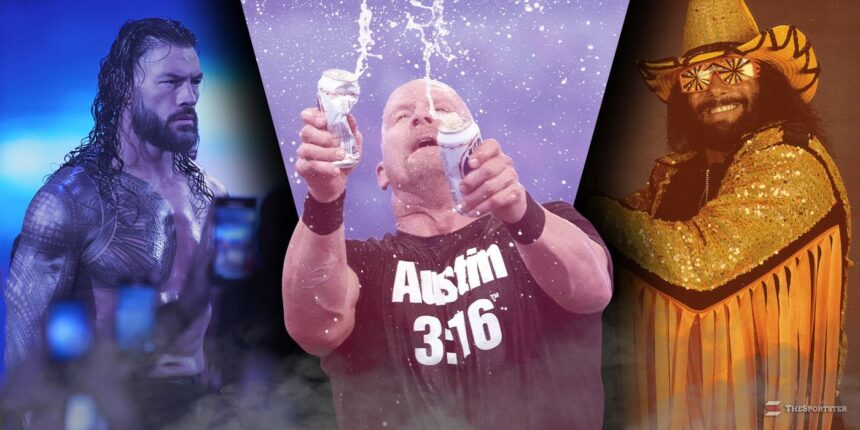
Many wrestlers didn’t start their careers with the iconic ring names we know today. Imagine WrestleMania’s headline featuring names like "Spider" or "Sterling Golden" instead—hard to picture "Macho Man" Randy Savage or "Hulk Hogan" with those original names. Wrestlers often change or evolve their personas, and these shifts can be crucial to their success.
For example, Roman Reigns debuted in 2010 as Leakee in Florida Championship Wrestling before adopting the tougher "Roman Reigns" name when FCW became NXT. While Leakee wasn’t a bad name, Roman Reigns sounds more commanding, matching his main-event status.
Dwayne Johnson began as Flex Kavana in USWA but skyrocketed to fame as "The Rock" after adopting a name that connected him to his wrestling lineage and added charisma, making him one of the most celebrated wrestlers ever.
Glen Jacobs tried multiple gimmicks like Diesel and Isaac Yankem before becoming "Kane," a character that brought him great success both in wrestling and as mayor of Knox County, Tennessee.
Batista initially wrestled as Leviathan in OVW but switched to a version of his real name, which stuck and ultimately became synonymous with his WWE and Hollywood career.
Terry Bollea, better known as Hulk Hogan, started wrestling under different names, including Sterling Golden, but the Hulk Hogan persona turned him into one of wrestling’s biggest stars.
Randy Savage originally wrestled as "Spider" and other names before becoming the "Macho Man," a moniker that defined his legendary career.
Sting began as Blade Runner Flash before simplifying his name and creating an iconic persona that lasted decades.
John Cena’s early wrestling identity was "The Prototype," but using his real name helped him become one of WWE’s top stars.
Steve Austin debuted as "The Ringmaster" but gained fame and legacy under the "Stone Cold" nickname that perfectly suited his rebellious character.
Triple H started his career as Hunter Hearst Helmsley, a name fitting a suave character, but evolved into Triple H, a tougher and more commanding persona fitting his later role in wrestling and executive leadership.
These name changes signify more than just branding—they often reflect shifts in attitude, character, and connection with fans, which are critical to a wrestler’s success.
Fan Take:
This insight highlights how pivotal the right ring name can be in shaping a wrestler’s legacy and fan connection. For WWE fans, understanding these transformations shows the craft behind wrestling personas and how it drives the excitement and storytelling in the sport.